
Starting to invest can feel complicated, but it doesn’t have to be. In this guide, we aim to transform what can seem like a complex financial process into a straightforward, actionable plan.
A successful investment journey begins with a strategy that’s tailored to your specific goals, timeline, and appetite for risk. We’ll break down what that means in practice, so you can start investing with confidence.
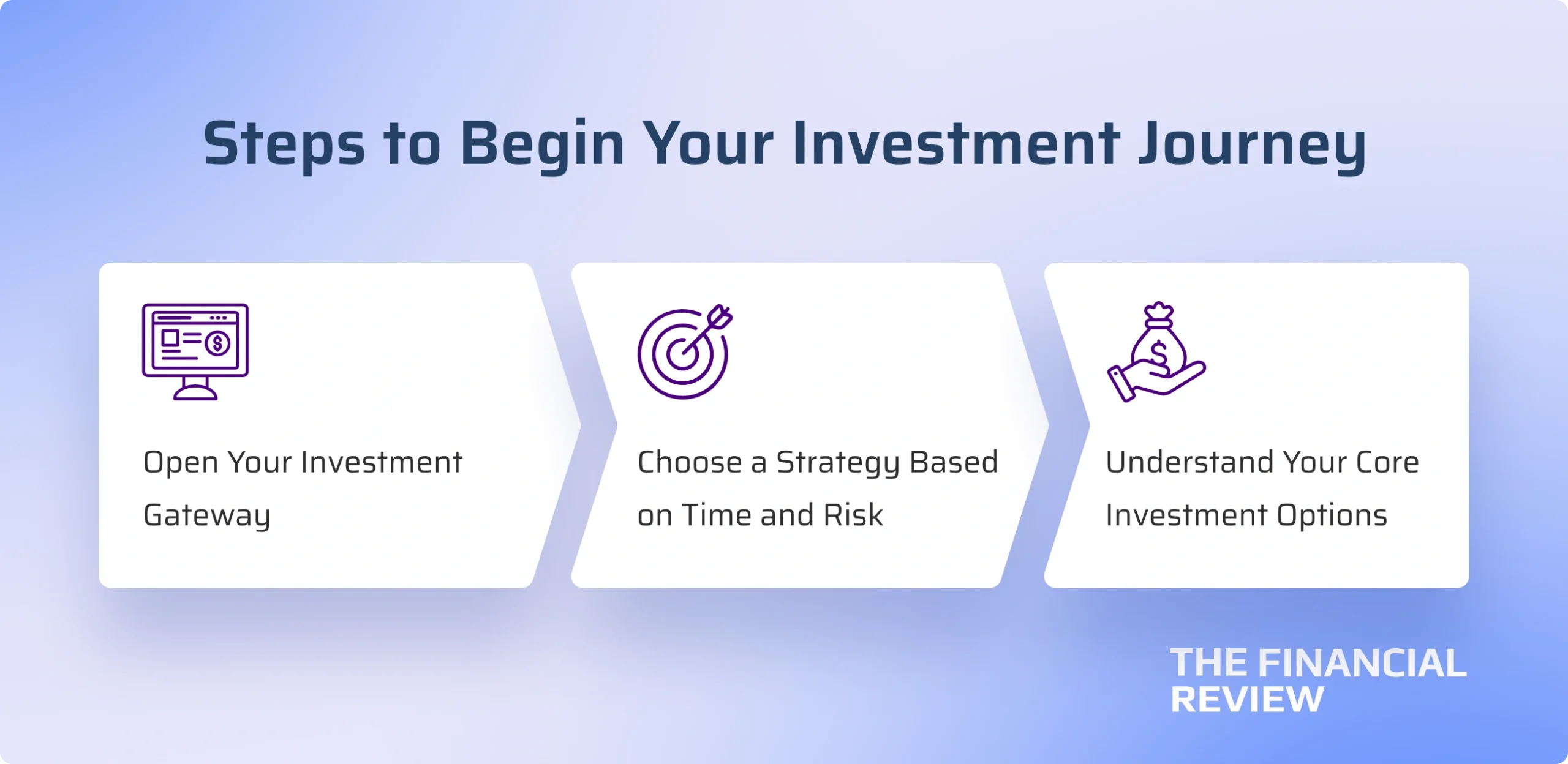
Step 1: Open Your Investment Gateway
Before you can buy any investments, you need a place to hold them. This is called a brokerage account. The process for opening a brokerage account is often as straightforward as opening a new bank account. You’ll provide some personal information and then fund the account, typically via a transfer from your checking or savings account.
If you’re unsure which brokerage firm to choose, look for an online one that specifically targets beginners. These brokers generally offer low costs, great educational content, and easy-to-navigate trading platforms.
Step 2: Choose a Strategy Based on Time and Risk
Your investment strategy typically depends on two critical factors: how much money you need and when you need it.
The Long-Term Outlook (5+ Years)
If you are saving for a goal that is many years away, such as retirement, your portfolio can afford to take on more risk.
This means a larger portion of your money can be in stocks. For most people, the most effective way to invest in stocks is through low-cost mutual funds, index funds, or exchange-traded funds (ETFs). These funds offer broad market exposure and require far less effort than picking individual stocks.
The Short-Term Outlook (<5 Years)
If you’ll need the money soon, such as for a down payment on a home, the volatility associated with stocks is too risky. You are better off keeping your funds safe in an online savings account, a cash management account, or a very low-risk investment portfolio where the primary focus is capital preservation, not rapid growth.
Step 3: Understand Your Core Investment Options
Once you open your brokerage account, you’ll need to decide what investments to buy. Every investment carries risk, but knowing the basics can help you align those risks with your goals.
| Investment type | What it is | Best for… |
|---|---|---|
| Stocks (equities) | A share of ownership in a single, specific company | Experienced investors or beginners using them as part of a diversified fund |
| Mutual funds | A package of investments (stocks, bonds, etc.) managed by a professional fund manager | Investors who want instant diversification and don’t want to pick individual investments |
| Index funds and ETFs | Funds that track a specific market index, such as the S&P 500, which are low cost and highly diversified | Most beginners and long-term investors who are seeking simplicity and broad market returns |
If the thought of picking funds still feels overwhelming, consider a robo-advisor. These platforms automate investing by building and managing your portfolio using low-cost ETFs and index funds.
They are ideal for beginners because they often require low or no minimum investment and charge a small fee for management (typically around 0.25% of your balance). It’s a fast, easy way to put your investment strategy into action.
The Key Takeaway
Starting your investing journey is about clarity, not complexity. Focus on aligning your investment strategy with your timeline. If you have long-term goals, you can risk stock market volatility by embracing diversified, low-cost funds; however, short-term savings should remain in safer, more stable accounts.
By opening a brokerage account and applying a simple, rules-based approach — such as using index funds or a robo-advisor — you reduce decision fatigue and allow the power of time and compounding interest to work for you.
About the TFR Team
The TFR Team is a group of seasoned financial experts dedicated to delivering clear, insightful analysis and commentary on personal finance, investing, and market trends. With years of combined industry experience, the team brings trusted knowledge and practical perspectives to help readers make informed financial decisions.

Insights & Playbooks
The Financial Review - Fresh Insights Every Month
Expert reviews, step-by-step playbooks, and market explainers to help you make smarter money moves.