
For years, the Chase Sapphire Preferred card has been a top choice for newcomers to travel rewards. It combines the value and flexibility of earning points with strong travel protection for a reasonable annual fee of $95.
However, the credit card landscape is constantly changing. With new, competitive cards available, it is worth exploring whether the Chase Sapphire Preferred option still delivers value and justifies the yearly cost.
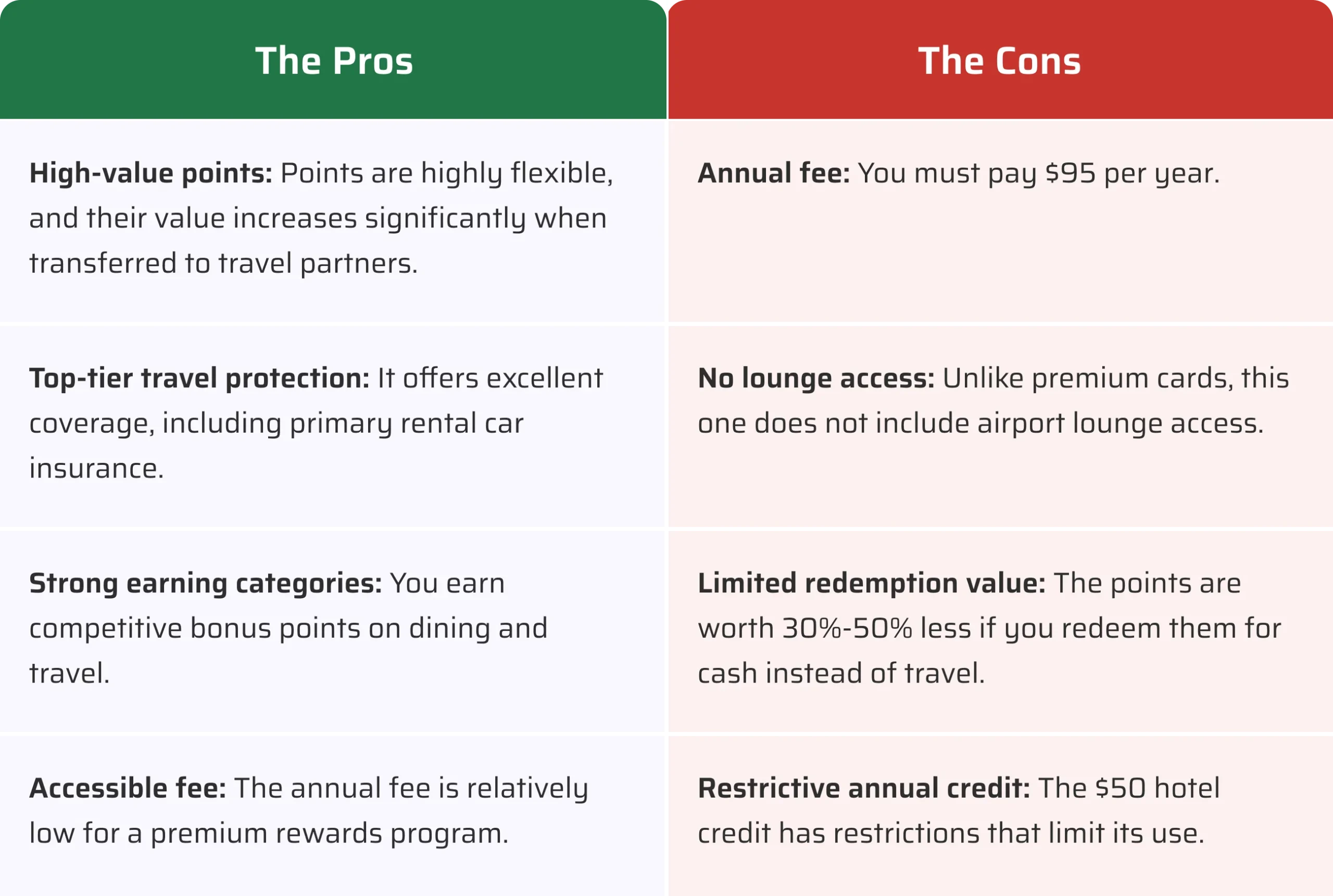
Quick facts: The pros and cons
The Welcome Bonus: High Reward, High Requirements
Although this card currently offers a 75,000-point welcome bonus, it requires you to spend a significant $5,000 in the first three months.
While 75,000 points is an impressive reward, it is important to ensure you can comfortably meet this high spending threshold without stretching your budget. For travelers willing to learn how point transfers work, this bonus alone can easily cover a round-trip international flight.
Application restrictions to be aware of
Remember the following to prevent misunderstandings:
- The 5/24 rule: If you have opened five or more personal credit cards at any bank in the last 24 months, Chase will almost certainly deny your application for this card. This is non-negotiable.
- The 48-month rule: You are not eligible for the welcome bonus if you have earned one on any Sapphire card in the past 48 months.

Points Earning Potential: Solid But Not Always the Best
The card offers a reliable structure for earning points on many common expenses, making it easy to accumulate points quickly:
- 5x points on travel booked directly through the card issuer’s travel portal
- 3x points on dining, select streaming services, and online grocery purchases
- 2x points on all other general travel purchases not booked via the portal, including flights, taxis, and tolls
- 1x point on all other purchases
Although earning 3x points on dining is great, other competing cards offer 4x or even higher on groceries or dining. If maximizing spending in those categories is your goal, the Sapphire Preferred plan may not be the best choice.
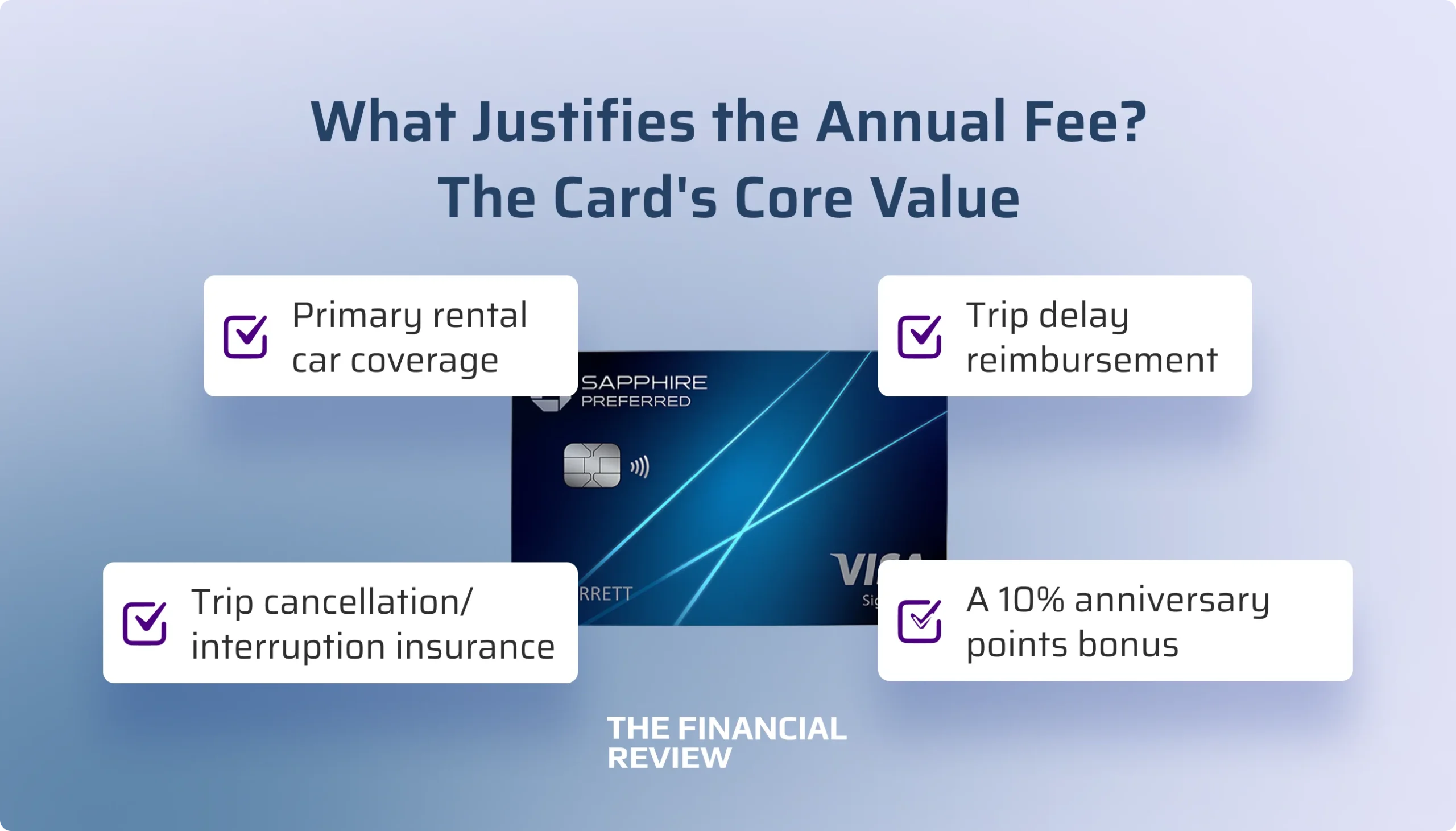
What Justifies the Annual Fee? The Card’s Core Value
What sets this card apart from no-annual-fee options is the specific benefits that, when used properly, make up for the $95 charge.
Travel protection
This is perhaps the strongest reason to keep the card. It offers comprehensive travel protection, which can earn you significant savings in emergencies. The benefits include the following:
- Primary rental car coverage: A major perk of the card, this coverage allows you to rely on the card’s insurance, instead of your personal policy, if you damage your rental car or it is stolen.
- Trip delay reimbursement: If your flight, train, or other mode of transport is delayed, Chase will reimburse you for reasonable expenses, such as meals and accommodation.
- Trip cancellation/interruption insurance: This coverage reimburses you for non-refundable fares if your trip is canceled or cut short for covered reasons.
Annual hotel credit
The card offers a $50 hotel credit each year, which helps offset half of the annual fee, but it comes with a major catch: You can only use the credit for hotel stays booked through the card issuer’s specific travel portal.
Using third-party portals for bookings can sometimes result in missing out on benefits or paying a slightly higher rate than if booking directly. It is a nice perk, but only if you are comfortable with the booking restrictions.
A 10% anniversary points bonus
Each year, you get a points bonus equal to 10% of your total spending from the previous year. For example, if you spend $25,000 on the card, you will get 2,500 extra points. This straightforward bonus enhances your overall earnings without hidden requirements.

Redemption: The Secret to Success
If you are planning on getting this card, you need to commit to an effective redemption strategy. Your points are worth significantly less if you do not use transfer partners. The following tips will help you maximize your earnings:
- Maximum value: Transferring points to one of the 14 airline or hotel loyalty programs, such as World of Hyatt, Southwest, or United, is the best way to get the most value from your points. This strategy can unlock incredible trips.
- Good value: You can also book travel through the card issuer’s travel portal, which offers a decent redemption rate. This is simpler than transferring points but typically provides less value.
- Poor value: Redeeming points for cash or gift cards offers the lowest value. Avoid this if you want to maximize the value of your card.
Ultimately, to get the most from this card, you need to engage with the transfer process. Otherwise, you will likely get better value from a free cash-back card with no $95 annual fee.
About the TFR Team
The TFR Team is a group of seasoned financial experts dedicated to delivering clear, insightful analysis and commentary on personal finance, investing, and market trends. With years of combined industry experience, the team brings trusted knowledge and practical perspectives to help readers make informed financial decisions.

Insights & Playbooks
The Financial Review - Fresh Insights Every Month
Expert reviews, step-by-step playbooks, and market explainers to help you make smarter money moves.