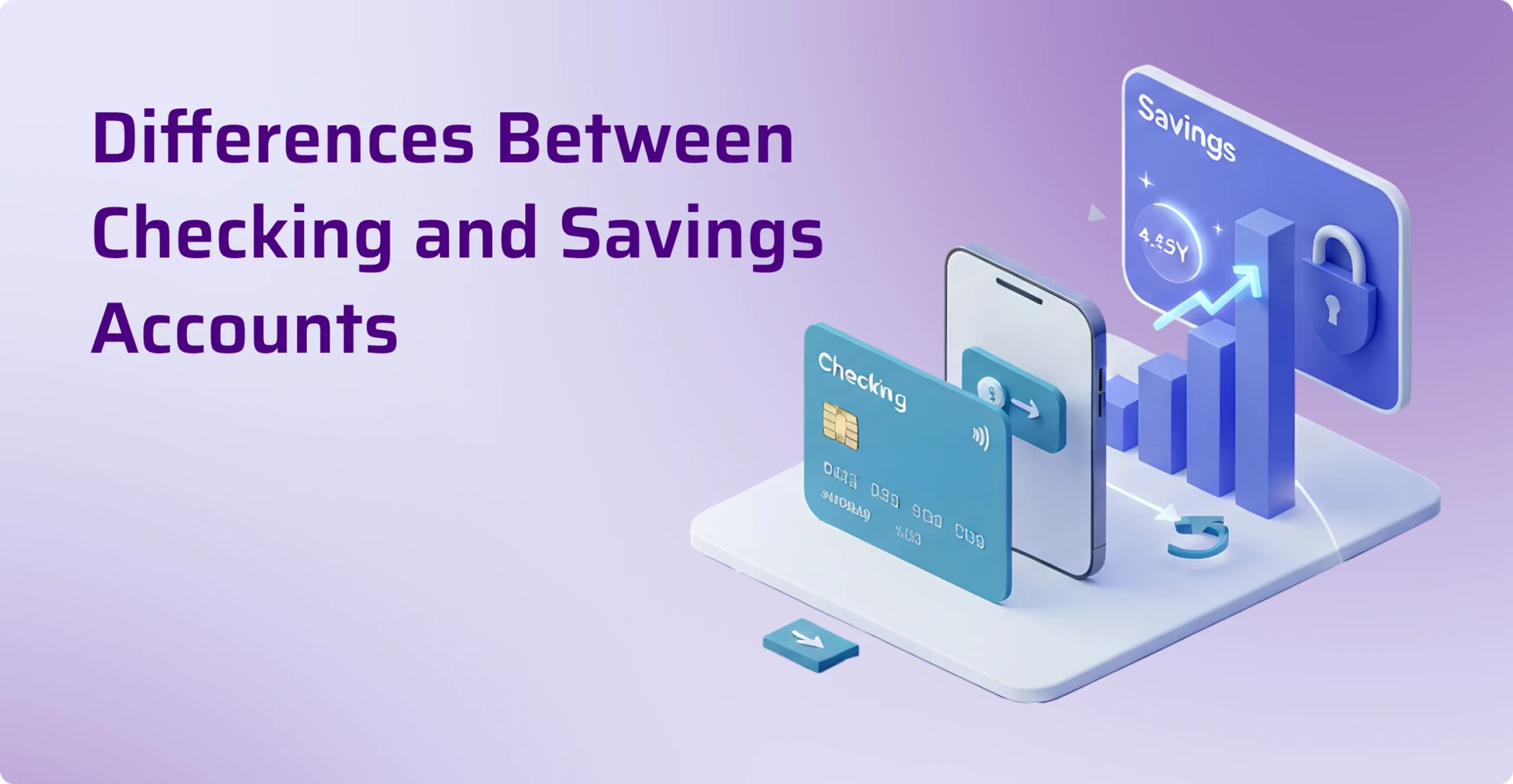
When it comes to managing your money, two of the most fundamental tools you can use are the checking account and the savings account. While both keep your funds secure, they fulfill different purposes. Understanding the differences between these types of accounts is essential to building a strong financial foundation.
We recommend a checking account for everyday spending and deposits. In contrast, you should use a savings account to keep and grow your money for your future goals. In this guide, we will describe what these differences mean in practice.
Checking Accounts: Access for Daily Finances
Think of your checking account as your financial hub for daily transactions. The primary benefit of a checking account is that it provides you with easy, immediate access to your money.
Here are the best uses for a checking account:
- Payments: You can use a debit card, a paper check, or a digital wallet (such as the one on your smartphone) to pay for purchases directly.
- Transfers: You can easily pay bills or transfer money to others using mobile or online banking features.
- Deposits: You can receive your paycheck via direct deposit.
- Withdrawals: You can easily access cash at ATMs.
How the cash value works
Since checking accounts are for daily spending and access, they typically pay little to no interest on your balance. Their value is in their functionality, not their growth potential.
Be aware of fees
While checking accounts are essential, be mindful of common fees, such as:
- Monthly maintenance fees: Often waived if you maintain a minimum balance or set up a direct deposit
- Overdraft fees: Charged when you spend more than you have in your account
- ATM fees: Charged when you use an ATM outside of your bank’s network

Savings Accounts: Building Wealth and Securing the Future
Your savings account is where you should put money you don’t need right away. It’s an excellent option for an emergency fund, a down payment on a car, or a future vacation. The core benefits of a savings account are growth and security.
The advantage: Earning interest
The biggest advantage of a savings account is that you will earn interest on your balance. While interest rates vary, this feature allows your money to gradually grow over time, giving you a return on the funds you set aside. To make saving easier, you can also often set up automatic monthly transfers from your checking account.
Limitations
Savings accounts often include limitations on how easily you can access your money. Banks set these limits to protect their reserves, but they may also help you save. You can think of the limits as a small barrier that keeps you from using your long-term funds for impulse purchases.
Here are two key limitations to note for savings accounts:
- Withdrawal limits: Banks may limit the number of withdrawals you can make per statement cycle, and exceeding this limit can result in fees.
- Interest rate: While your money will grow in a savings account, the interest rate (called the annual percentage yield or APY) is usually lower than that of riskier investments, such as stocks or mutual funds.
The Main Differences Between Checking and Savings Accounts
| Feature | Checking account | Savings account |
|---|---|---|
| Primary purpose | Use for spending and everyday transactions. | Use for saving and long-term financial goals. |
| Access and liquidity | Highly liquid: Can access daily with a debit card, checks, or ATM. | Less liquid: Banks limit access to deter spending. |
| Interest earned | Typically, there is little to no interest. | Pays interest (APY) on your balance. |
| Common fees | Be aware of overdraft, ATM, and monthly maintenance fees. | Be aware of excessive withdrawal and minimum balance fees. |
| Security | Highly secure: Federally insured up to $250,000 | Highly secure: Federally insured up to $250,000 |
Use Both Checking and Savings Accounts for Financial Resilience
Since checking and savings accounts serve unique yet complementary roles, the best strategy for almost everyone is to have both.
It is also advantageous to link the two accounts. With the accounts linked, you can easily transfer between them. In addition, this setup can act as a safety net, potentially allowing you to transfer funds automatically and helping you avoid costly overdraft fees.
By clearly separating your spending money from your savings, you create a system that simplifies your day-to-day finances and actively builds toward a more secure future. This simple organizational step is a powerful way to manage your money.
About the TFR Team
The TFR Team is a group of seasoned financial experts dedicated to delivering clear, insightful analysis and commentary on personal finance, investing, and market trends. With years of combined industry experience, the team brings trusted knowledge and practical perspectives to help readers make informed financial decisions.
More Related Blogs

Insights & Playbooks
The Financial Review - Fresh Insights Every Month
Expert reviews, step-by-step playbooks, and market explainers to help you make smarter money moves.