
It’s easy to see insurance as just another bill. After all, you’re paying for something you hope you never need to use. But insurance isn’t just a product; it’s a necessary safety net that prevents everyday incidents from becoming financial catastrophes.
Would you be able to pay out of pocket for a totaled car, a house fire, or a year without income? For most people, the answer is an emphatic “no.” Paying a small, consistent premium now is a strategic move that protects your assets, your income, your family, and your future.
This article examines nine foundational insurance policies that are must-haves for comprehensive financial protection. Read on to learn what each type of policy means in practice.
Protecting Your Physical Assets
These policies safeguard the things you own and the responsibilities you carry in daily life.
Auto insurance
Driving uninsured is not only illegal but also incredibly risky. The average car accident claim can cost thousands of dollars, a substantial amount to pay on your own.
- The core need: At a minimum, you must meet your state’s liability requirements (bodily injury and property damage coverages) to pay the expenses if you cause an accident.
- A key insight: State minimums are often dangerously low, so discuss increasing your liability limits with an agent. If accident costs exceed your liability coverage, victims can sue you for your personal assets, including your home or future wages.
Homeowners or renters insurance
Regardless of whether you own or rent your home, you have valuable assets and carry potential liability risk.
- For homeowners (dwelling): This covers the cost of repairing or rebuilding your physical structure after a covered peril, such as fire, wind, or hail, causes damage.
- For renters: Never assume your landlord’s policy covers you. Renters insurance specifically protects your personal belongings against theft or disaster and provides essential liability coverage.
- For everyone (liability): If a guest sustains injuries on your property and sues, this policy covers your legal expenses and any resulting damages.
Flood insurance
Floods are the most frequent and costliest natural catastrophe in the US, yet according to the National Flood Insurance Program (NFIP), only about 4% of homeowners carry flood insurance.
- The core goal: Flood insurance protects you from expensive water damage since standard homeowners and renters policies do not cover floods.
- Why you need it: Nearly one-third of NFIP flood claims over the last decade occurred in low-to-moderate risk areas. Even a single inch of water can cause thousands of dollars in damage, making this necessary coverage for almost everyone, regardless of where you live.
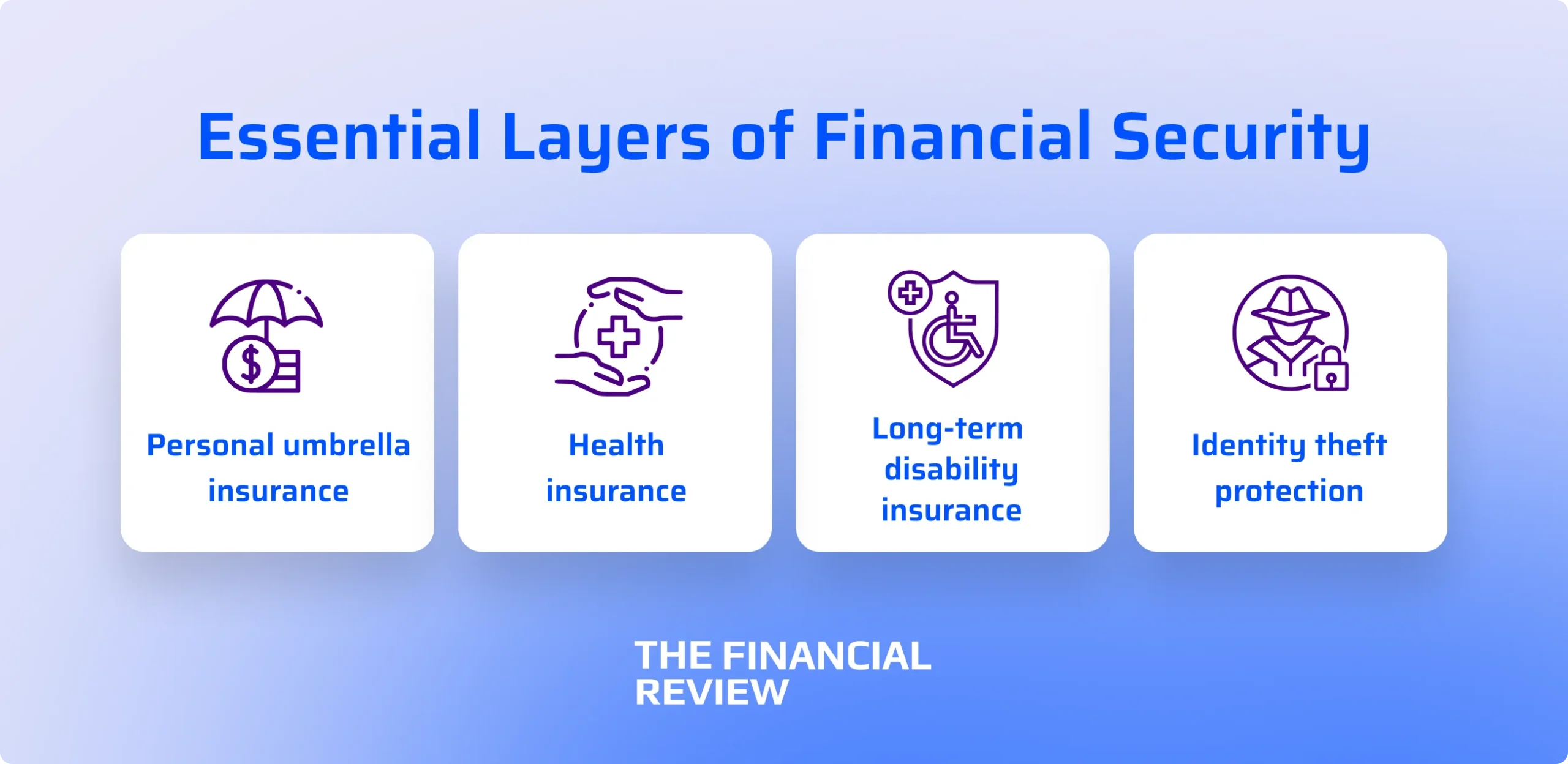
Essential Layers of Financial Security
These policies help protect your income, health, and accumulated wealth from a major disaster or lawsuit.
Personal umbrella insurance
Think of this as an extra layer of liability protection that stacks on top of your auto and homeowners policies.
- How it works: If you cause a severe accident and the resulting damages (e.g., medical costs, car repairs, or legal fees) exceed the liability limits of your primary policy, your umbrella policy becomes a source of secondary coverage to pay for the excess damages.
- Why it matters: Without it, high-cost lawsuits can quickly eliminate your savings and even impact your future earnings. Umbrella insurance is an effective way to safeguard your home and financial stability.
Health insurance
Medical issues are a leading cause of personal bankruptcy in the US. Even if you consider yourself healthy, an unexpected illness or accident can quickly lead to overwhelming debt.
- The core goal: Health insurance prevents financial disaster when the unexpected occurs. Even a high-deductible plan that covers catastrophic events provides critical protection when you need it most.
- The reality: Few families have enough savings to cover thousands in unexpected medical bills, and health insurance is the single best defense against this outcome.
Long-term disability insurance
The US Social Security Administration reports that roughly one in four 20-year-olds will become disabled before reaching retirement age.
- The protection: Long-term disability insurance replaces a portion of your income if you are unable to work for an extended period.
- The goal: If your employer does not offer adequate coverage, a supplemental policy protects your ability to earn a living.
Identity theft protection
In our digital age, identity theft is a stressful, frustrating risk. If someone steals your identity, it can take months or years to resolve, potentially lowering your credit score and making it hard to get loans or employment.
- The coverage: While some homeowners policies offer limited coverage, a dedicated policy helps you recoup costs associated with reclaiming your financial identity.
- What it pays for: Identity theft protection often covers expenses for replacing documents, notarizing affidavits, obtaining credit reports, and paying for necessary legal or attorney fees.
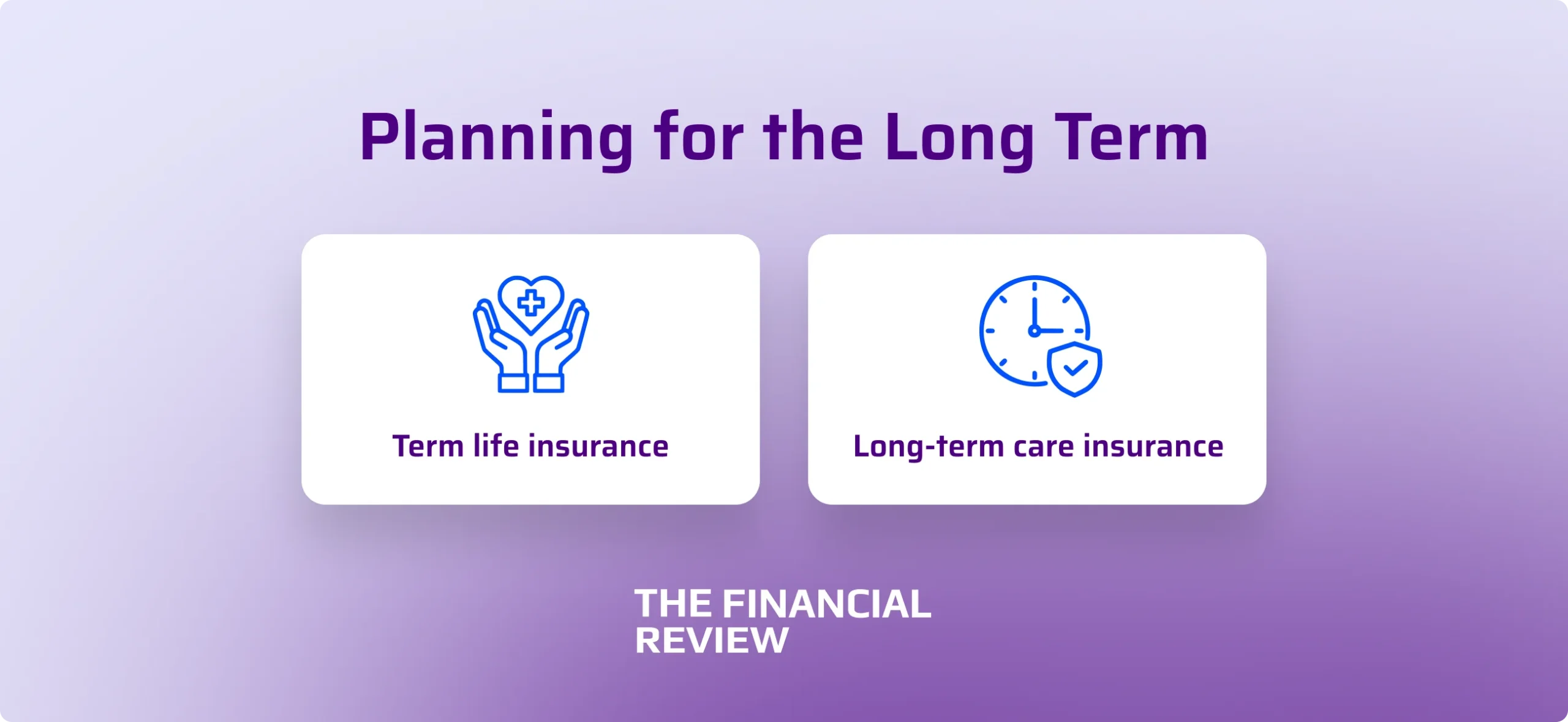
Planning for the Long Term
These policies are critical for protecting your loved ones and handling the costs associated with aging.
Term life insurance
If your death would create a financial burden for anyone who depends on you (a spouse, children, or even business partners), life insurance is a must.
- The benefit: A term life policy guarantees a payout if you pass away during a specified time period (e.g., within 10, 20, or 30 years).
- Why it matters: It is generally less expensive than whole life insurance and is often the most appropriate option for covering financial needs such as mortgages, education, and lost income during your peak earning years.
Long-term care insurance
The US Department of Health and Human Services estimates that 70% of people who reach age 65 will need some form of long-term care, such as in-home care or residential care in a nursing home or assisted living facility.
- The cost: Per the Federal Long Term Care Insurance Program, the annual cost of long-term care ranges from approximately $40,000 to over $100,000, which can quickly drain most retirement savings.
- A critical misconception: Do not rely on government programs; Medicare does not cover long-term care costs, and Medicaid is a fallback program with limited options. Insurers specifically design long-term care policies to cover these expenses.
Understanding the nine foundational types of insurance is the first step toward building a secure financial life. However, the complexity of these policies — from choosing liability limits to evaluating preexisting conditions — means selecting the right coverage isn’t a job you can do alone. Contact a finance professional for the best advice.
About the TFR Team
The TFR Team is a group of seasoned financial experts dedicated to delivering clear, insightful analysis and commentary on personal finance, investing, and market trends. With years of combined industry experience, the team brings trusted knowledge and practical perspectives to help readers make informed financial decisions.
Insights & Playbooks
The Financial Review - Fresh Insights Every Month
Expert reviews, step-by-step playbooks, and market explainers to help you make smarter money moves.