Choosing the right credit card can feel complicated at first, but it does not have to be. The best card for you is not necessarily the one with the most attractive rewards; it is the one that aligns perfectly with your current credit health, spending habits, and financial goals.
Think of your credit card as a smart financial tool. Use it strategically, and it can help you earn rewards, manage expenses, and build a strong credit foundation. Our experts have created this quick guide to the main types of credit cards and a simple strategy to help you find the best fit.
The Six Core Types of Credit Cards
Most credit cards fall into one of six categories. Understanding each type is the first step to narrowing your search.
| Card Type | What it Does Best | Who Should Get it | Credit Score Needed |
|---|---|---|---|
| Rewards | Turns everyday purchases into bonus rewards, such as cash back, points, or travel perks | Individuals who pay their balance in full every month and want to earn rewards on recurring expenses | Good to excellent (670+ FICO® score) |
| 0% introductory annual percentage rate (APR) | Offers a promotional period (typically 12–21 months) where you pay zero interest on new purchases | Anyone planning a large expense (e.g., medical bills or home repairs) who needs time to pay off the balance interest-free | Good to excellent |
| Balance transfer | Allows you to move high-interest debt from another card, usually with a 0% introductory APR | Those committed to paying off existing credit card debt quickly while minimizing interest charges | Good to excellent |
| Secured | Requires a security deposit, which typically becomes your credit limit | Those with no credit or actively rebuilding poor credit | Poor or no credit history |
| Store | Gives discounts or rewards for shopping at particular retail stores (e.g., Target or Amazon) | Frequent shoppers of a specific brand or those with poor or fair credit | Poor/fair to good |
Your Three-Step Selection Strategy
Once you understand the different types of credit cards available, you can follow this simple three-step process to identify your top contenders.
Step 1
Know your credit score, know your options
Your credit score determines which cards you are eligible for and the APR the credit card company will offer you:
- Action: Check your FICO® score and credit report before applying.
- Insight: If you have good credit, you will typically qualify for premium rewards cards and balance transfer credit cards with 0% APR. Building an excellent credit score can offer even greater benefits, qualifying you for the lowest interest rates on future large loans (such as mortgages or business loans), potentially saving you thousands.
Step 2
Analyze your everyday spending habits
The best rewards cards are the ones that give you the most value back on the purchases you already make:
- Action: Look at your expenses over the last few months to identify where the majority of your money goes, such as groceries, eating out, gas, or travel.
- Insight: If you spend heavily on travel, travel rewards cards are your best bet. If your biggest expense is groceries and gas, look for cash back credit cards that offer rewards on these types of eligible purchases.
Step 3
Scrutinize the fine print
Fees and interest rates can quickly negate the value of any rewards, so it is important to understand the fine print:
- Action: Examine the card’s terms, including the annual fee, APR, and balance transfer fee. Estimate the value of the rewards, credits, and perks you expect to use to determine if the cost is worth it.
- Insight: The card is a smart investment only if the estimated value you receive is greater than the fee. If you plan to carry a balance, a low or 0% APR is paramount. If considering a balance transfer card, ensure the transfer fee (usually 3%–5% of the transferred amount) still saves you money compared to the interest you would have paid on your old card.
Essential Habits for Credit Card Success
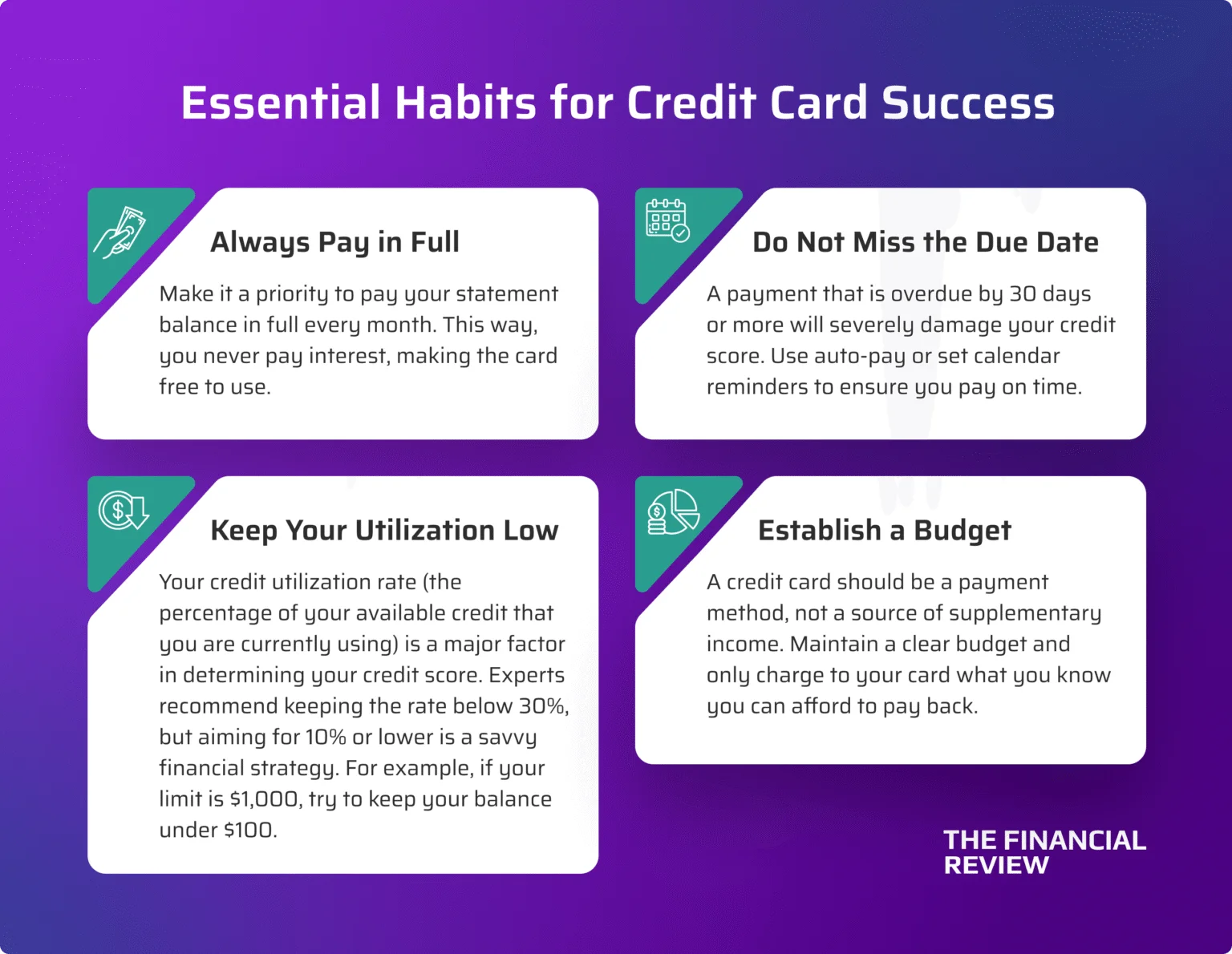
A credit card can be an excellent financial tool, but it requires responsible management. If you are a first-time user, embrace these best practices to ensure you build, rather than damage, your financial profile:
- Always pay in full: Make it a priority to pay your statement balance in full every month. This way, you never pay interest, making the card free to use.
- Do not miss the due date: A payment that is overdue by 30 days or more will severely damage your credit score. Use auto-pay or set calendar reminders to ensure you pay on time.
- Keep your utilization low: Your credit utilization rate (the percentage of your available credit that you are currently using) is a major factor in determining your credit score. Experts recommend keeping the rate below 30%, but aiming for 10% or lower is a savvy financial strategy. For example, if your limit is $1,000, try to keep your balance under $100.
- Establish a budget: A credit card should be a payment method, not a source of supplementary income. Maintain a clear budget and only charge to your card what you know you can afford to pay back.
About the TFR Team
The TFR Team is a group of seasoned financial experts dedicated to delivering clear, insightful analysis and commentary on personal finance, investing, and market trends. With years of combined industry experience, the team brings trusted knowledge and practical perspectives to help readers make informed financial decisions.
Insights & Playbooks
The Financial Review - Fresh Insights Every Month
Expert reviews, step-by-step playbooks, and market explainers to help you make smarter money moves.